One rule of thumb that has served me well is that batteries should be changed every five years, period; and this rule I’ve applied to cars, motorcycles and airplanes. But, as the man says: “Rules are made to be broken.”
Some of my equipment–the plane, one motorcycle and the Airstream–reside in the desert year round and heat is brutal on batteries; and they all failed in 2025; none made it five years. In the case of the motorcycle and the Airstream changing the batteries was not a big deal; of course, nothing is cheap anymore but the effort involved to make changes was minimal.
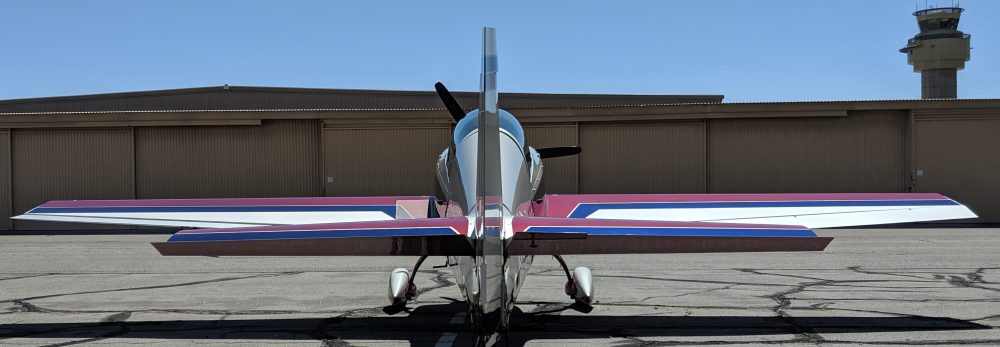
But, oh, when it came to the Extra…….. the Germans have totally rewritten the book on complexity. For whatever reason, the battery is mounted ahead of the front seat rudder pedals, in between the main landing gear struts. And it is absolutely impossible to get the battery out to replace it without a major disassembly of the plane: read that to mean approximately a full day of labor (and that is not MY labor, it the is labor of someone at Ray’s Aviation who knows what he is doing).
I began to notice the Extra’s battery showing signs of stress along about last July; it just didn’t seem to turn the engine over quite as quickly as it did when it was younger and now frequently got “stuck” on the engine’s first compression stroke. But with the annual coming up in December, I was sure that all was OK and the battery couldn’t possibly fail before them. But the symptoms were getting worse with each turn of the magneto swith, but I forged ahead, confident that somehow the battery would make it until December. But the summer heat was brutal and the battery was failing fast. October rolled around and the writing was on the wall: the battery wouldn’t make it til December.
I’ll skip the usual drama associated with all the little details that pop up when time to ferry the plane to SZP. Suffice it to say that all went well for the short trip. Because of the complexity associated with gaining access to the battery, in particular, the amount of the fuselage disassembly required, we decided to go ahead and annual the plane in October rather than do the whole disassembly process again in just two more months. (I learned later that it was actually necessary to remove the header fuel tank in order to get the battery out.) Ever the optimist, I knew that since there was nothing else wrong with the plane, the rest of the annual would be a simple process.
Wrong.
It wasn’t long before I heard the news: Ray found that the engine was running rough and he suspected there was something going on with the electronic ignition half of the ignition system. I just don’t notice things like rough running engines. But, we agreed that Ray would continue the exploratory work to see if the source of the problem could be isolated and, hopefully, fixed; but, after a couple of more days of this, there was no such luck. The final decision came down to removing the electronic unit and either (1) returning it to the manufacturer for further testing or (2) just replacing the electronic unit with the original magneto that Ray had removed and, fortunately, saved from two years before when the electronic unit was first installed; I voted for option #2 and it was wildly successful. Even I noticed how much better the plane was running.
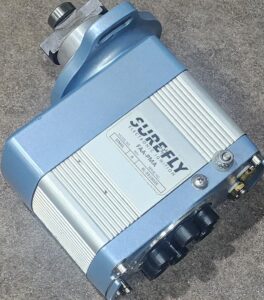
Makes A Great Paperweight
Of course, the cost of what I thought was going to be a rather routine annual greatly exceeded what I had mentally budgeted; but those things happen; after all, this is a plane we are talking about. But on the bright side, I ended up with: a plane that was running much nicer, a world class electronic magneto that would now serve as a world class paper weight AND a new battery that would like be good for the next four years; and, all I do for all of this was just charge it.